

How a Novel Public Listing Powers Next-Generation Clean Energy Lasers
Eindhoven, Thursday 29 October 2026
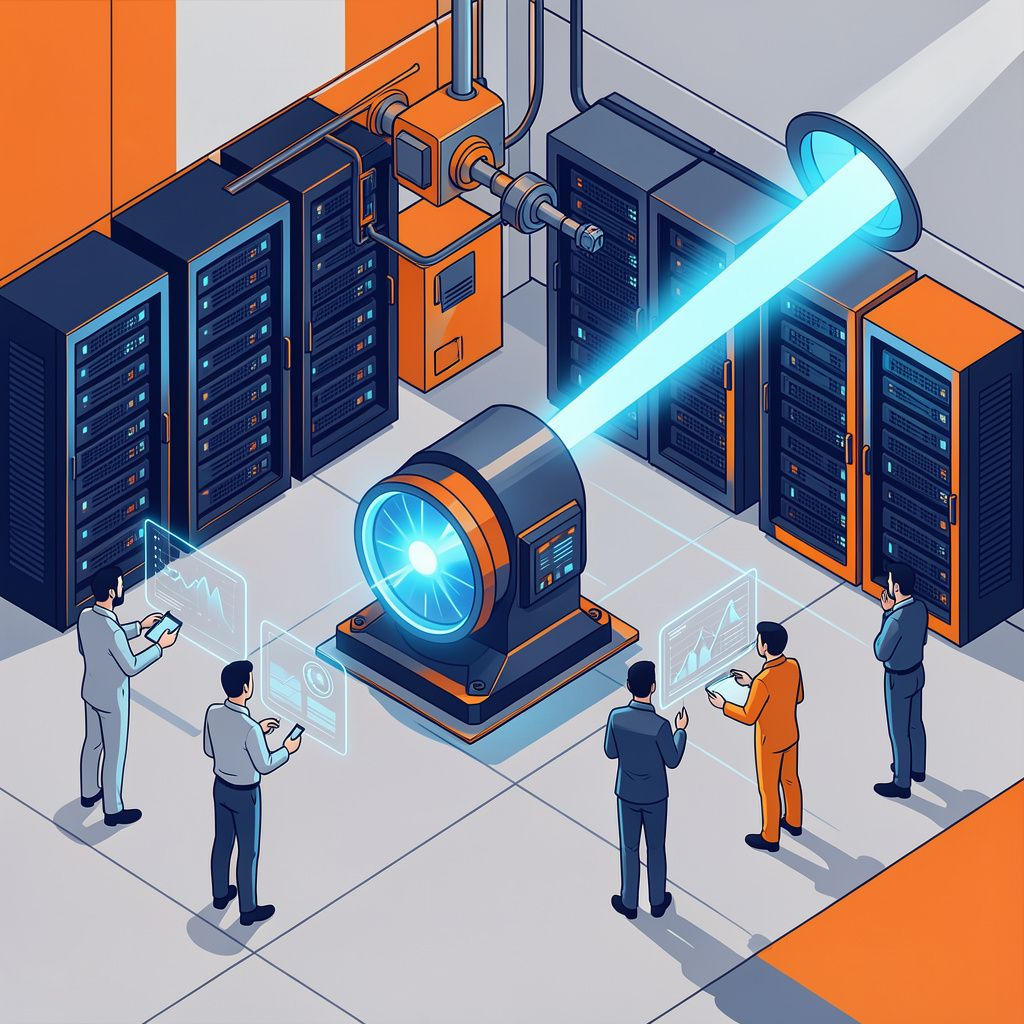
Blue Laser Fusion has secured a $34 million public listing to commercialise novel gigawatt-scale lasers, delivering over 100,000 times the peak power of conventional beams for defence and clean power.
Bridging Deeptech Capital Demands via Alternative Listings
Securing liquidity for advanced physical engineering ventures has historically challenged deeptech innovators, given the long development cycles and substantial capital expenditure required to scale laboratory breakthroughs into operational hardware [GPT]. On 29 October 2026, Blue Laser Fusion, Inc. addressed this capital bottleneck by completing a $34 million private placement transaction executed concurrently with an alternative public offering (APO) through a reverse merger with Unite Acquisition 2 Corp., spanning corporate operations in Goleta, California, and New York, NY [1]. The financing included an initial closing of $25 million in private placement units [1], leaving an additional 9 million to complete the full funding package. Advised by exclusive placement agent Laidlaw & Company (U.K.) Ltd alongside legal counsel Latham & Watkins LLP, Pillsbury Winthrop Shaw Pittman LLP, and Sichenzia Ross Ference Carmel LLP, the transaction establishes a publicly traded corporate platform designed to bypass conventional initial public offering delays and finance the rapid scaling of high-power pulsed laser systems [1].
Dual-Use Photonics Architecture and Peak Power Scaling
The newly unlocked capital is allocated directly to accelerating engineering milestones, manufacturing supply chain expansion in Goleta, and operational deployment across dual-use domains [1]. Blue Laser Fusion was incorporated in Delaware in November 2022 by Nobel laureate Dr Shuji Nakamura and semiconductor laser industry veterans, establishing research footprints with an R&D lab at Caltech and the Osaka University Blue Laser Fusion Institute [1]. The company’s core technological offering relies on its proprietary GigaPulse™ laser architecture, which incorporates optical enhancement cavity (OEC) engineering to achieve peak power levels in the gigawatt spectrum [1]. According to the firm, this pulsed architecture generates over 100,000 times the peak power of standard continuous-wave laser beam sources [1], making the hardware equally adaptable to high-energy national security applications and next-generation fusion energy systems [1].
Engineering National Security and Sovereign Energy Grids
From an industrial perspective, dual-use high-power laser hardware operates at the strategic intersection of tactical directed-energy defence mechanisms and baseload clean power [1]. Blue Laser Fusion founder Dr Shuji Nakamura emphasised that global procurement priorities are simultaneously focusing on sovereign energy resilience and tactical directed-energy capabilities, positions that necessitate scalable, deployed laser systems for institutional defence contractors as well as civil power grids [1]. Jimmy Ahern, Owner and Managing Partner of Laidlaw & Company, noted that capital markets are increasingly directing liquidity toward the convergence of defence technology and photonics manufacturing [1]. The company’s expansion follows historical milestones in inertial confinement fusion, notably when the National Ignition Facility (NIF) at Lawrence Livermore National Laboratory (LLNL) demonstrated laboratory fusion ignition and energy gain in 2022 [1].
Intellectual Property and Industrialised Hardware Delivery
Sustaining hardware leadership in extreme-power photonics requires extensive intellectual property and multi-governmental institutional backing [GPT]. Blue Laser Fusion maintains an international intellectual property portfolio exceeding 140 patents and patent applications, and has secured development contracts from both the United States Department of Energy and the Japan Fusion Moonshot programme [1]. By pairing non-dilutive state support with public market equity structures, the firm seeks to derisk the industrial-scale assembly of optical enhancement cavities and deliver the operational reliability demanded by high-tech materials and defence engineering sectors worldwide [1].