

The Netherlands Expands Mandatory Mattress Recycling to Commercial Sectors
The Hague, Monday 26 October 2026
Dutch regulations now compel all manufacturers to finance mattress recycling through 2031, expanding coverage to hospitals and hotels while targeting an ambitious 80% collection rate by 2030.
Stricter Collection Quotas and Infrastructure Expansion
On Monday, 26 October 2026, the Dutch government formalised an extensive regulatory framework that significantly sharpens national recycling targets for end-of-life mattresses [1]. While consumer collection schemes had achieved a collection rate of 63% in 2025, the new accord dictates that this figure must reach at least 75% by 2028, before climbing to an ambitious target of 80% by 2030 [1]. To bridge the operational gap between current recycling streams and future quotas, the mattress manufacturing industry has committed to expanding its network of physical drop-off points across the country from 386 locations to a minimum of 700 [1], representing a projected expansion of 81.347% in total regional collection points. By making drop-off hubs more accessible at civic amenity sites and retail venues [1], domestic reverse-logistics channels will capture significantly higher volumes of post-consumer foam and steel [1].
Broadened EPR Obligations Across Commercial Streams
A pivotal structural shift in the policy update is the abolition of exemptions previously granted to hospitality and healthcare sectors [1]. Starting from 1 November 2026, the statutory Extended Producer Responsibility (EPR) scheme will encompass business-to-business mattresses, requiring commercial volumes from hotels, hospitals, and holiday holiday parks to enter mandatory recovery circuits [1]. Every company that places mattresses on the Dutch commercial market is legally required to pay a financial contribution per unit to the Stichting Matras Recycling Nederland (MRN) foundation [1]. This scheme, originally introduced in 2022 and scheduled to expire at the end of October 2026, has now been formally extended for a five-year mandate running through 31 October 2031 [1]. Minister Van Veldhoven of Climate and Green Growth signed the binding ministerial order, thereby removing former exemptions for smaller manufacturers and establishing uniform compliance across the entire sector [1].
Industrial Deconstruction and Chemical Upcycling
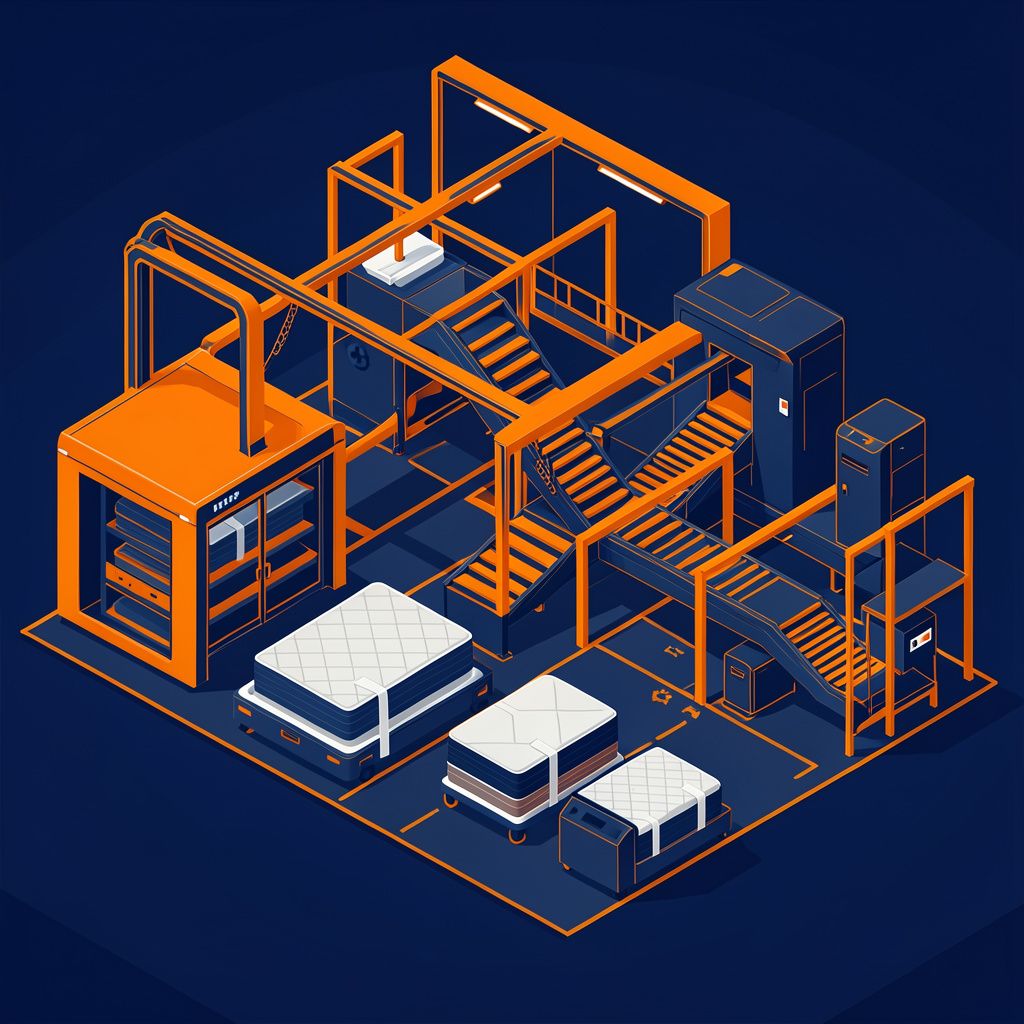
The mandate extends beyond mere aggregate collection by placing rigorous quantitative requirements on material reclamation itself [1]. Under the binding agreement, at least 80% of all recovered secondary materials dismantled by specialist recycling facilities must be made available for reuse in new products by 2028, with that threshold increasing to 85% by 2030 [1]. Once collected, discarded units undergo industrial deconstruction where steel springs, textiles, and flexible polyurethane foams are cleanly segregated [1]. Recovered scrap steel flows back into metallurgical smelting cycles, while recovered foam is directed towards acoustic insulation panels or transformed into chemical feedstocks [1]. Frontline clearance services also reflect this broader transition towards rigorous sorting, ensuring that reusable goods are diverted to charitable channels, recyclables are sent for processing, and only unrecoverable residue reaches authorised landfill sites [2].
Catalysing Benelux Circular Chemical Clusters
The influx of segregated flexible polyurethane foams provides critical secondary hydrocarbon supplies for major Benelux chemical clusters, notably Chemelot in Geleen and the integrated petrochemical network spanning Rotterdam and Antwerp [GPT]. Polyurethane polymers, which historically presented major end-of-life disposal hurdles due to their thermoset molecular structures, are increasingly treated via advanced chemical recycling routes such as acidolysis, glycolysis, and thermal pyrolysis [GPT]. These processes break the complex polymer chains back into base polyols and aromatic amines, directly displacing fossil naphtha imports [GPT]. When integrated with industrial-scale green hydrogen produced via regional electrolyser corridors, these recovered streams can be hydro-processed into circular polymers and virgin-grade chemical intermediates with a significantly reduced carbon footprint [GPT]. By anchoring reliable secondary supply chains through 2031 [1], the Dutch framework accelerates capital expenditure in regional cleantech and circular polymer infrastructure [1][GPT].