

Dutch Coalition Secures Long-Term Ukraine Defence Funding as EU Consensus Fractures
The Hague, Monday 23 February 2026
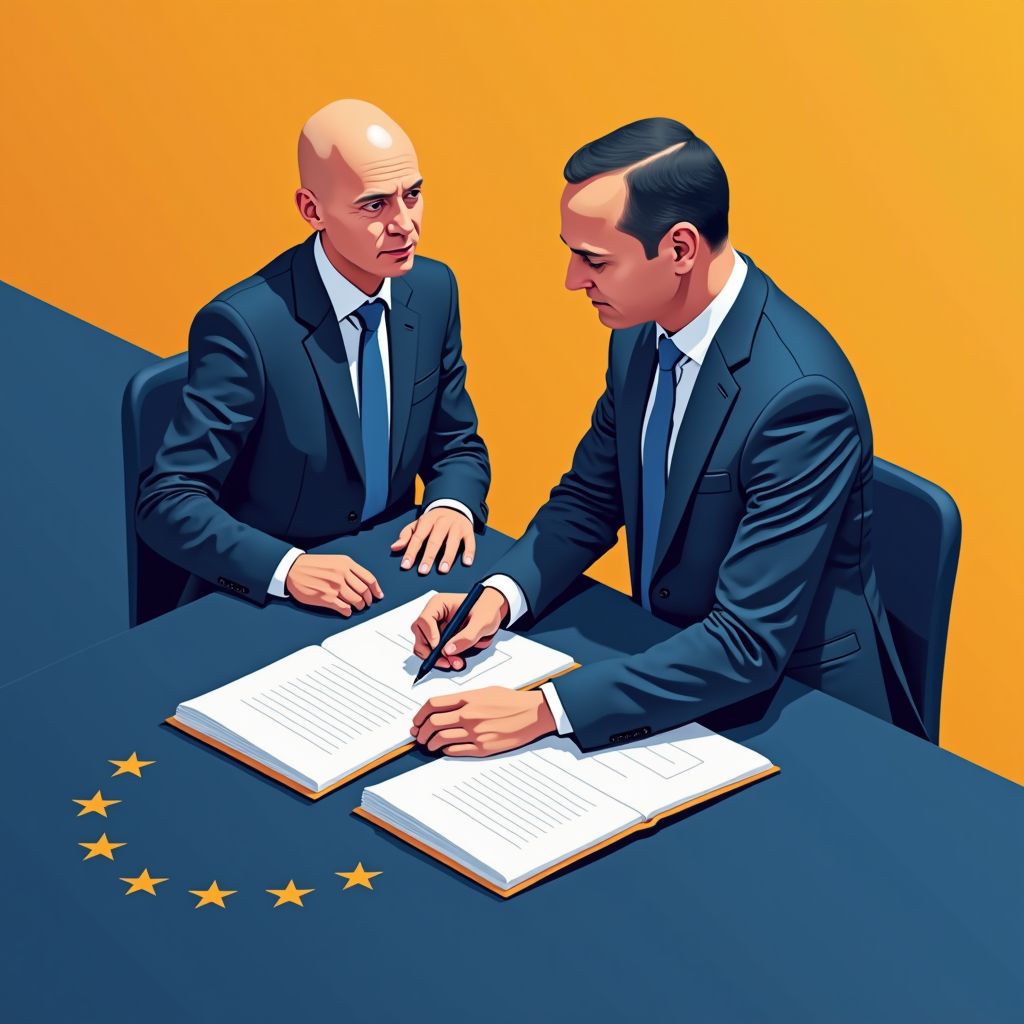
As the new D66-led government takes office today, 23 February 2026, it has moved decisively to ringfence over €3 billion in military assistance for Ukraine through 2029. This strategic financial commitment arrives at a critical juncture; while Hungary blocks a €90 billion EU loan days before the war’s fourth anniversary, the Netherlands is unilaterally solidifying its long-term defence posture. Defence Minister Ruben Brekelmans has explicitly framed this as a necessity to counter Russian ambitions that extend beyond Ukrainian borders. Most significantly, this funding underpins a shift toward active European security integration, evidenced by simultaneous Dutch-French operational planning for a future ‘Coalition of the Willing’. By guaranteeing support years in advance, The Hague is effectively insulating its defence strategy from short-term political volatility, ensuring that procurement for dual-use technology and hardware continues uninterrupted despite diplomatic stalemates in Brussels.
Technological Integration and Strategic Autonomy
The allocation of over €3 billion for the 2027–2029 period represents more than a fiscal transfer; it signifies a sustained investment in high-tech warfare capabilities and industrial resilience [1]. This multi-year commitment builds upon the alliance’s previous support, which totalled €5 billion last year, establishing a predictable procurement horizon for defence manufacturers [1]. The strategic focus on advanced systems is evident in recent collaborative demonstrations at Thales in Gennevilliers, where Dutch material support—specifically air defence systems and electronic warfare technology—was highlighted as critical for the protection of Ukrainian troops [5]. These dual-use technologies align with the core themes of the symposium scheduled for tomorrow, 24 February, at Leiden University, which will analyse the integration of drones, digital command structures, and the necessity of technological innovation on the modern battlefield [4]. By securing this funding, the D66-led coalition ensures that the Dutch defence industry can continue to supply complex hardware without the uncertainty often associated with annual budget cycles.
European Consensus under Pressure
This unilateral Dutch stability stands in stark contrast to the volatility currently paralysing collective European decision-making. As of 21 February 2026, Hungary has effectively blocked a critical €90 billion EU war loan intended to sustain Ukraine’s state finances [3][6]. With the European Commission aiming to transfer these funds by April 2026—a deadline that coincides with Hungarian elections—the veto, confirmed by Prime Minister Viktor Orbán, threatens Kyiv’s ability to pay salaries and purchase weaponry during a crucial window [3]. The urgency of this financial gridlock is amplified by the intensity of recent hostilities; in the past week alone, Moscow has launched over 1,300 drones, 1,400 guided bombs, and 96 rockets against Ukrainian targets, underscoring the disparity between diplomatic delays and the kinetic reality of the war [2].
Energy Resilience and Industrial Competitiveness
Beyond immediate defence, the coalition’s strategy encompasses a broader industrial and energy security framework, acknowledging that modern warfare targets critical infrastructure. Following Russian attacks on Ukrainian energy grids on 20 February 2026, the Netherlands allocated an additional €23 million specifically for energy support [2]. Simultaneously, Dutch officials are deepening ties with France to secure long-term energy resilience and hardware independence. The Dutch Ministry of Climate and Green Growth recently visited Paris to study France’s ‘Programmation pluriannuelle de l’énergie 3’ (PPE 3), which outlines a massive scaling of nuclear reactors and hydrogen capacity to reduce fossil fuel dependence [5]. This cooperation is vital as European high-tech manufacturers face intense pressure from Chinese industrial competition, with Chinese products currently entering the market at costs 30 to 40 per cent lower than their European counterparts [5]. This economic reality necessitates a robust, state-backed procurement strategy to maintain a viable European defence industrial base.
Future Security Architecture
Ultimately, the new government’s approach signals a transition from reactive aid to proactive security architecture. This is underscored by the presence of Lieutenant-General Van Deventer in Paris to plan a ‘Coalition of the Willing’ aimed at guaranteeing peace following any potential ceasefire [5]. By integrating military aid with high-tech industrial cooperation and energy transition planning, the Netherlands is attempting to future-proof its contribution to European security. As Defence Minister Brekelmans noted, this unwavering support is essential because Russian imperial ambitions extend far beyond Ukraine, threatening the cohesion of Europe itself [1].
Sources & Ecosystem Partners
- www.ukrinform.net
- nos.nl
- www.demorgen.be
- www.universiteitleiden.nl
- www.nederlanders.fr
- www.instagram.com