
Germany Sparks European Backlash Over Classified Intelligence Deal With Google
Berlin, Friday 30 October 2026
Germany’s secret services will pay Google €500 million for classified cloud infrastructure, triggering intense debate across European security circles over reliance on American tech giants instead of sovereign alternatives.
A Lucrative Bet on US Hyperscalers
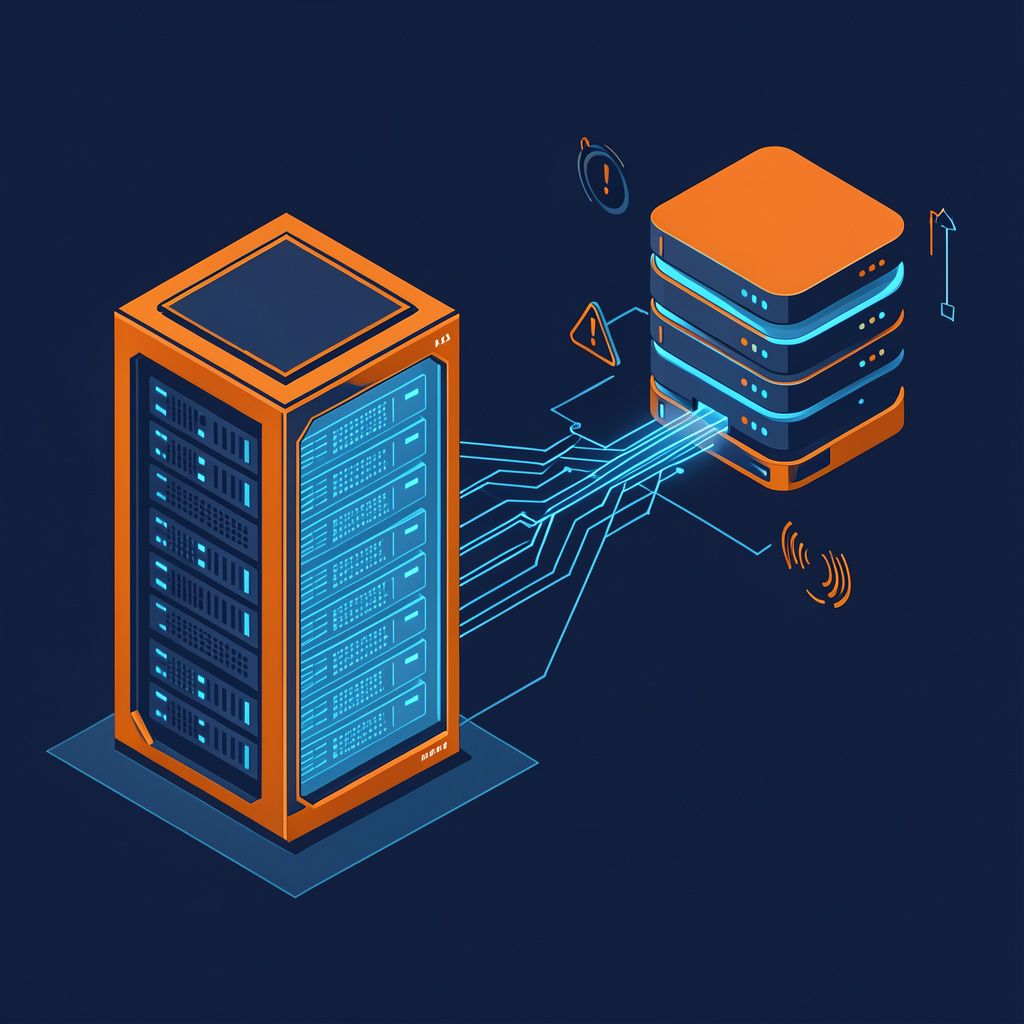
The decision by German security authorities to modernise cross-agency collaboration via American infrastructure represents a pivotal shift in European governmental procurement [1]. As revealed on 29 October 2026 by German public broadcasters NDR and WDR, the Federal Intelligence Service (BND), together with the Federal Office for the Protection of the Constitution (BfV) and the Military Counterintelligence Service (MAD), intends to invest €500 million to build a dedicated cloud platform known as ‘ND-Cloud’ [1]. The project is designed to handle intelligence data classified up to ‘Secret’ [1]. To meet strict baseline requirements, the architecture will rely on an air-gapped configuration of the Google Distributed Cloud (GDC), operating strictly without a direct internet connection and retaining all operational data on a segregated domestic IT network located inside Germany [1].
Legal Exposure and Maintenance Scrutiny
Despite the physical safeguards of an air-gapped environment, the transaction has drawn sharp critique from digital policy analysts and cybersecurity professionals who question whether sovereign control can truly be maintained while relying on United States commercial intellectual property [1][4]. Fundamental vulnerabilities remain regarding the jurisdiction of American intelligence laws, specifically potential government data access requests triggered under the US CLOUD Act, the Foreign Intelligence Surveillance Act (FISA), or Executive Order 12333 [1]. There is also operational unease over how the system will be serviced: it remains unconfirmed whether on-site maintenance and operations will require direct interventions by Google engineers, echoing previous contested deployments of Palantir software in the German federal states of Hesse and Bavaria [1].
Technical Governance and Update Cycles
The complex life cycle of enterprise cloud software introduces distinct continuous-assurance problems for security apparatuses [1]. Sven Herpig, Head of Cybersecurity and Emerging Threats at the Interface think tank, underscored critical concerns regarding the routine cycle of system modifications, noting that ‘every Google update’ poses an evaluation conundrum [1]. Herpig highlighted the governance dilemma inherent in modern continuous deployment models, asking: ‘How significant do the changes have to be for an updated version to require re-evaluation and re-approval?’ [1]. If every software patch or distributed system modification demands formal security vetting to prevent hidden backdoors, agencies risk either accumulating unpatched vulnerabilities or accepting proprietary foreign code without comprehensive internal verification [1].
Domestic Challengers Pitch Sovereign Alternatives
The multi-million-euro procurement has galvanised European privacy and software advocates who argue that continental suppliers are being systematically bypassed in favour of Silicon Valley incumbents [1][4]. German secure-communication platform Tuta openly challenged the intelligence services’ choice, asserting that the €500 million capital expenditure could fund an entirely domestic, quantum-resistant infrastructure [1][4]. Tuta noted that deploying an independent instance of its enterprise storage platform on BND’s own hardware would utilise hybrid, post-quantum end-to-end encryption to prevent third-party interception, while leveraging open-source code to ensure independent auditing against backdoors [1]. In an official reaction, Tuta urged public bodies to match rhetoric on digital sovereignty with concrete budget allocations rather than deepening dependencies on foreign hyperscalers [1].
Strategic Repercussions Across Benelux and Beyond
The procurement choice has reverberated across neighbouring European security circles, particularly within the Benelux region, where defence planners, enterprise software investors, and cybersecurity entrepreneurs are observing Berlin’s strategy as a precedent for broader governmental IT architecture [GPT]. Germany’s willingness to outsource sensitive core intelligence infrastructure to an American tech giant—even within an isolated framework—complicates collective European Union efforts to foster homegrown software scalability in SaaS and advanced encryption [GPT]. As European enterprise ecosystems confront an accelerating digital transformation in legacy defence sectors, the debate exposes the structural tension between procuring immediate hyperscaler capability and investing in truly sovereign, sovereign-certified continental tech stacks [1][GPT].
Sources & Ecosystem Partners
- tuta.com
- duitslandinstituut.nl
- duitslandinstituut.nl
- www.facebook.com
- www.instagram.com
- www.reddit.com
- mastodon.social
- www.instagram.com