

Dutch Cabinet Advances Mandatory Helmet Law for Under-18 Electric Bike Riders
The Hague, Saturday 14 November 2026
The Dutch government has submitted legislation mandating helmets for under-18s on e-bikes by September 2027, responding to a sixfold surge in youth brain injuries since 2020.
Legislative Intervention and Public Health Imperatives
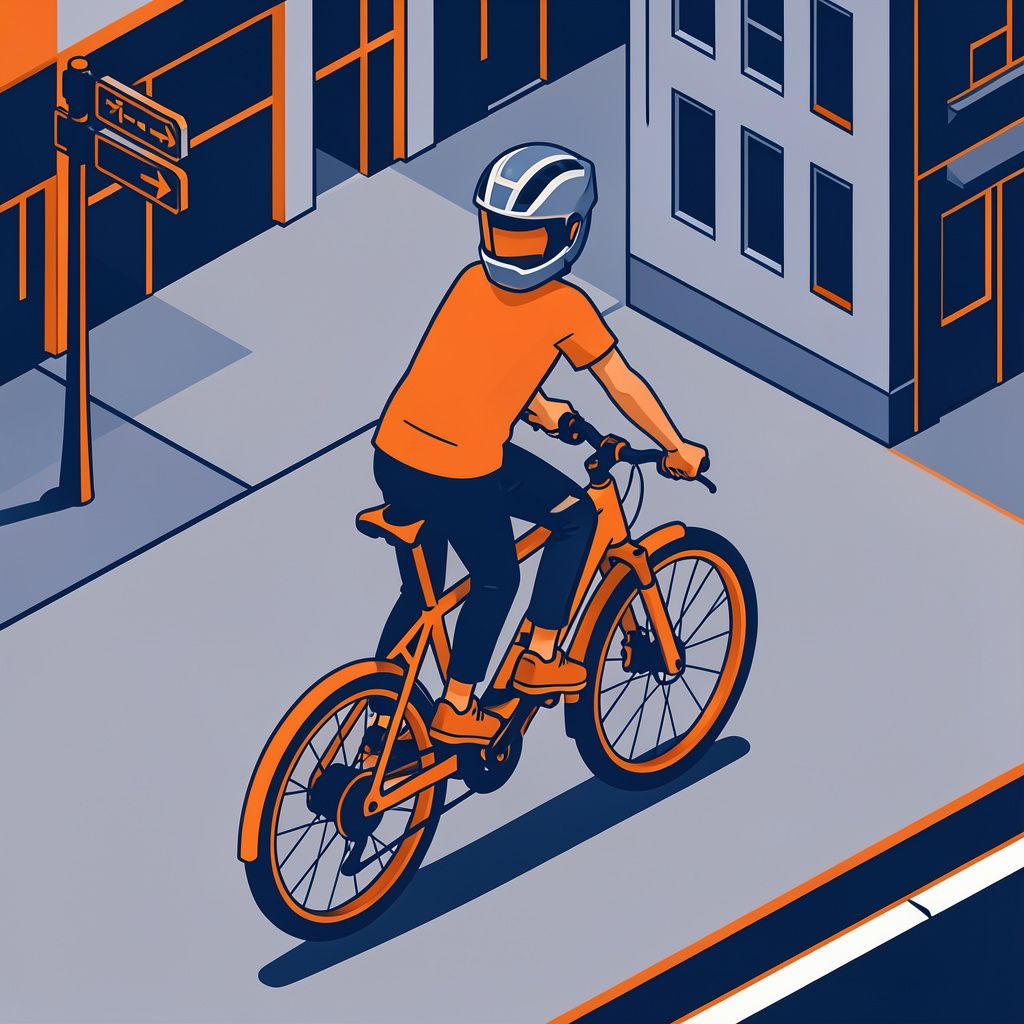
The Dutch Council of Ministers has formally submitted draft legislation to the House of Representatives introducing a mandatory helmet requirement for individuals under the age of 18 operating electric bicycles and light electric vehicles [1][2]. The measure, proposed by Minister of Infrastructure and Water Management Vincent Karremans, was cleared by the cabinet on Friday, 13 November 2026, and sent to parliament for preliminary scrutiny [1][3]. The target date for implementation is 1 September 2027, precisely synchronised with the start of the 2027–2028 academic school year [1][2][4]. Government motivation behind the regulatory shift rests on alarming trauma statistics: young people sustained 6 times as much brain injury in 2024 as they did in 2020 due to e-bike accidents [1][6]. Karremans stressed that severe accidents carry lifelong consequences, arguing that targeted statutory equipment mandates offer a direct intervention to curtail the incidence of acute traumatic brain injuries [1][6].
Comprehensive Scope Across Light Electric Vehicles and Cargo Fleets
The statutory obligation is designed with wide operational reach, capturing not only standard two-wheeled pedelecs and fatbikes, but extending broadly to light electric vehicles (LEVs) including electric cargo bikes (‘bakfietsen’), e-scooters (‘e-steps’), and Segways [1][2][4]. Crucially, the requirement encompasses both drivers and passengers under the age of 18, meaning that young children transported on the rear carrier of an electric bicycle or seated within a conventional consumer cargo box will be legally required to wear certified head protection [1][3][4]. Conversely, conventional bicycles lacking electric assistance remain entirely exempt from the rules [3]. Financial penalties for non-compliance will be enforced, though the exact monetary fine schedule is yet to be established during parliamentary debate [1][2].
RDW Type Approvals and Heavy Micro-Freight Reclassification
To prevent operational bottlenecks across community logistics and education sectors, the legislation outlines specific technical exemptions [1][2]. Vehicles engineered with integrated passive and active safety measures that fundamentally minimise traumatic head injuries can be granted dispensations [1][4]. The Netherlands Vehicle Authority (RDW) has been tasked with assessing, testing, and designating these exempt categories, which are anticipated to include out-of-school childcare transport vehicles known as BSO-buses [1][2][4]. In parallel, the cabinet decision enacts a major structural reform for commercial and heavy electric cargo bikes [1][2]. Previously classified under standard bicycle regulations, heavy freight bikes—such as high-capacity cargobikes utilised in municipal childcare and micro-logistics—will now be subject to the stricter regulatory standards governing BSO-buses [1][2][4]. In addition, the legal minimum operating age for drivers steering these heavy utility platforms will rise from 16 to 18 years, delivering an immediate shift in operator credentials: 2 years [1][2][4].
HTSM Hardware Architecture and Future Regulatory Horizons
The regulatory tightening represents the initial phase of a broader ministerial strategy. Under the forthcoming ‘Aanpak Fatbikes’ framework, Karremans intends to introduce a discrete vehicle category specifically isolating fatbikes from standard pedelecs [1][2][3]. Establishing an independent type-approval tier will provide municipal authorities with statutory authority to enforce minimum operational ages and designate localized fatbike-free zones [1][2][4]. For domestic manufacturers and high-tech systems and materials (HTSM) hardware suppliers, this legislative roadmap signals substantial compliance adjustments [GPT]. Hardware developers across the Benelux light electric mobility ecosystem will need to adapt powertrain architectures, electronic speed limiters, and onboard telematics to align with RDW-verified safety criteria and segregated municipal operating parameters ahead of the September 2027 enforcement deadline [1][2][GPT].
Sources & Ecosystem Partners
- www.rijksoverheid.nl
- www.nu.nl
- www.rtvfocuszwolle.nl
- jongerenomroep.nl
- www.thuisinfietsen.nl
- agenparl.eu
- www.easydutchnews.com
- www.reddit.com