

South Korea's SK Group Seeks 350 Billion Dollars for Giant Computing Hub
Seoul, Saturday 24 October 2026
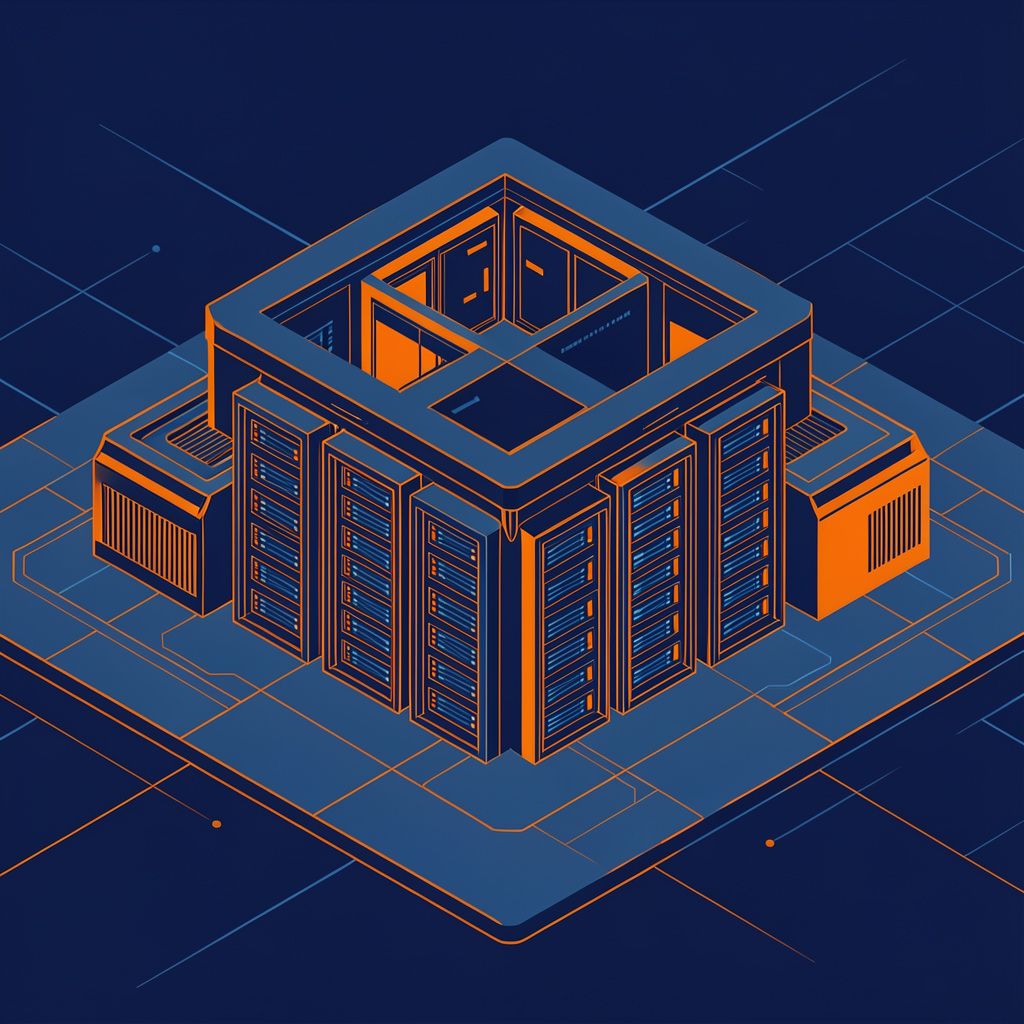
SK Group is seeking 350 billion US dollars to construct massive computing centres, defying growing investor unease over high spending and potential bubbles within the artificial intelligence sector.
Ambitious Expansion Timelines Defy Market Jitters
The ambitious initiative is spearheaded by SK Hyper, an operating division launched in July 2026 as an arm of SK Telecom, tasked with turning South Korea into an international computational bridgehead [1][2]. The group intends to assemble a staggering 15 gigawatts of data centre capacity domestically by 2035, with its introductory 5-gigawatt stage alone absorbing the entire 350 billion US dollar capital outlay [1][2]. To assemble this monumental capital stack, Chief Executive Officer Chung Suk-geun confirmed that SK Hyper is conducting fundraising discussions with international technology titans and institutional financiers, aiming to secure an initial tranches of external capital by late 2026 or early 2027, followed by continuous capital calls stretching over three to four years [1][2]. SK Telecom is slated to underpin the venture directly by injecting 750 billion South Korean won (around 567 million US dollars) into the operating unit through 2030 [1][2].
Managing Capital Risks Amid Valuation Scrutiny
This multi-billion-dollar push arrives amidst mounting turbulence across international equity markets, where institutions are increasingly scrutinising tech-sector capital allocation, operational funding pressures, and overall AI demand sustainability [1][4]. The sensitivity surrounding infrastructure valuations was demonstrated when conglomerate affiliate SK Hynix decided to abandon its planned US initial public offering of memory-storage subsidiary Solidigm—a listing expected to yield an enterprise valuation topping 10 billion US dollars [3]. Regulators and equity holders had pushed back against the proposed listing, yet equity markets rewarded the decision with an immediate bump in SK Hynix shares, reflecting investor relief over disciplined risk mitigation [3]. Mindful of these cyclical concerns, SK Hyper stated it will pace physical infrastructure commitments dynamically based on realised tenant demand rather than locking in irreversible expenditures upfront, even as it progresses a 900-megawatt complex in Ulsan and an adjacent 100-megawatt deployment with Amazon Web Services [1].
Semiconductor Supply Constraints and Advanced Equipment Demand
SK Hyper’s computational roadmap exerts compounding pressure across global semiconductor supply ecosystems, which are already strained by broader infrastructure outlays that climbed by 60% year-on-year to hit 1.3 trillion US dollars [5]. Leading memory producers Samsung and SK Hynix have seen physical operational inventories deplete to less than ten days of cover [5]. Production capacity is systematically rotating away from baseline DDR5 modules towards advanced High Bandwidth Memory generation 4 (HBM4) architectures necessary for dense AI clusters, stoking industry projections of generalised server RAM shortages by 2027 [5]. Such manufacturing transformations require bleeding-edge lithography capabilities, directly benefiting critical European precision tool manufacturers like Veldhoven-based ASML, whose extreme ultraviolet systems print the advanced computational silicon required for data hubs [6]. ASML shipped 113 lithography tools in the third quarter of 2026—a notable leap from 66 machines delivered during the equivalent quarter in 2025—which powered a 71.212% rise in system deliveries and pushed quarterly revenues to 11.66 billion euros [6].
Strategic Autonomy and European Integrated Photonics
As Asian powerhouses commit immense funding toward hardware clusters, the implications for European strategic autonomy and supply chain resilience have become increasingly pronounced [GPT]. Beyond front-end lithography from ASML and thin-film deposition equipment from Almere-based ASM International, mega-scale data centres are encountering fundamental electronic bottlenecks in latency and thermal regulation [GPT]. Addressing these operational challenges requires the structural adoption of integrated photonics, an advanced frontier championed by Dutch innovation clusters such as PhotonDelta [GPT]. By integrating optical chip interconnects alongside leading-edge logic and stacked HBM dies, next-generation computing complexes aim to mitigate soaring energy consumption [GPT]. SK Hyper’s cross-border initiative reinforces how continental equipment vendors and specialised European chip architectures remain integral to sustaining the world’s most capital-intensive computational expansions [1][6][GPT].
Sources & Ecosystem Partners
- theedgemalaysia.com
- nl.investing.com
- www.instagram.com
- www.facebook.com
- www.fcomputer.dk
- finance.yahoo.com
- www.facebook.com