

ASML Starts Construction on Expansive Eindhoven Hub to Double Domestic Capacity
Eindhoven, Monday 9 November 2026
ASML has begun building a 350,000-square-metre campus in Eindhoven to accommodate 20,000 workers, deploying aerospace-inspired manufacturing methods to meet surging global artificial intelligence demand by 2029.
Scaling Infrastructure for the Global Semiconductor Surge
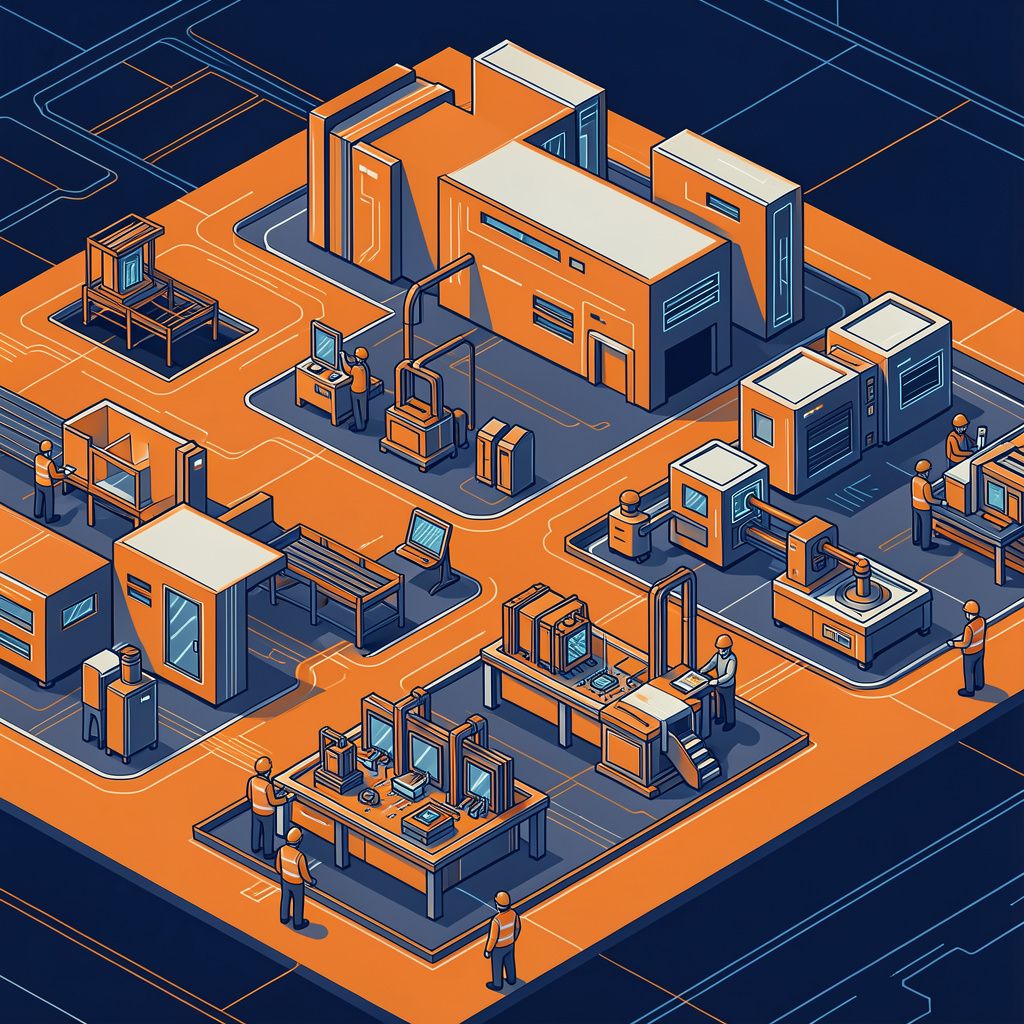
The groundbreaking of the Brainport Industries Campus (BIC) Noord site represents a transformative phase in European deeptech manufacturing [1]. Designed to ultimately cover an area of 350,000 square metres, the complex is planned to host up to 20,000 personnel over the long term, nearly doubling ASML’s workforce within the Netherlands [1]. The first stage of construction is targeted for completion in 2029, at which point the site will accommodate at least 3,000 employees responsible for production lines, integrated supply chain logistics, and supportive operational tasks that are currently distributed across separate company facilities [1].
Flow Manufacturing and Equipment Throughput
At the operational heart of the new facility is an advanced factory designed to build next-generation TwinScan lithography systems using an industrial ‘flow model’ [1]. Adapted from methodologies proven in the aerospace and automotive sectors, this assembly model streamlines the movement of sub-assemblies and core components across the production floor [1]. By restructuring manufacturing around continuous flow, ASML seeks to scale module fabrication rapidly, raise volume output, and significantly shorten installation schedules at customer fabrication sites worldwide [1].
Industrial Heritage and Regional Ecosystem Synergies
The decision to anchor this massive expansion in Eindhoven builds upon decades of structured industrial renewal across the Brainport region [2]. Following the corporate restructuring at Philips and the 1993 insolvency of truckmaker DAF, 21 local municipalities partnered with European Union backing through the Stimulus initiative to reinvent the regional economic framework [2]. This collaborative model turned research assets, such as Philips’ historic Natlab—which evolved into the High Tech Campus—into an interwoven network of specialised suppliers, university spin-outs, and commercial engineering powerhouses [2].
Strengthening European Strategic Autonomy Across the Value Chain
Beyond ASML’s lithography leadership, the broader Dutch and European semiconductor architecture relies on tightly integrated value-chain nodes [GPT]. Upstream wafer processing equipment from firms such as ASM International complements lithographic patterning, while integrated photonics ecosystems steered by initiatives such as PhotonDelta push optical computing and high-speed data transmission boundaries [GPT]. As global chip designers require ever-smaller feature sizes and tighter integration to sustain artificial intelligence capabilities, retaining core manufacturing infrastructure within Europe directly underpins the continent’s strategic autonomy objectives and mitigates cross-border supply chain bottlenecks [1][GPT].
Regional Bottlenecks in Energy, Housing, and Talent
Despite the long-term industrial benefits, incorporating tens of thousands of skilled professionals presents acute logistical and infrastructural hurdles for the Brainport area [1][2]. The arrival of additional engineering and operational teams by 2029 places immediate strain on regional electricity grid capacity, residential housing availability, and municipal public transit networks [2][GPT]. Balancing the aggressive global delivery timelines demanded by the ongoing artificial intelligence cycle against local community liveability and municipal infrastructure constraints remains the central operational challenge as construction progresses [1][2].