

Dutch Homeowners Must Install Hybrid Heat Pumps from 2029
The Hague, Wednesday 7 October 2026
From 2029, Dutch homeowners must replace old boilers with smart hybrid heat pumps, cutting household gas use by 65% as the country targets gas-free heating by 2050.
A Regulatory Roadmap for Energy Transition Hardware
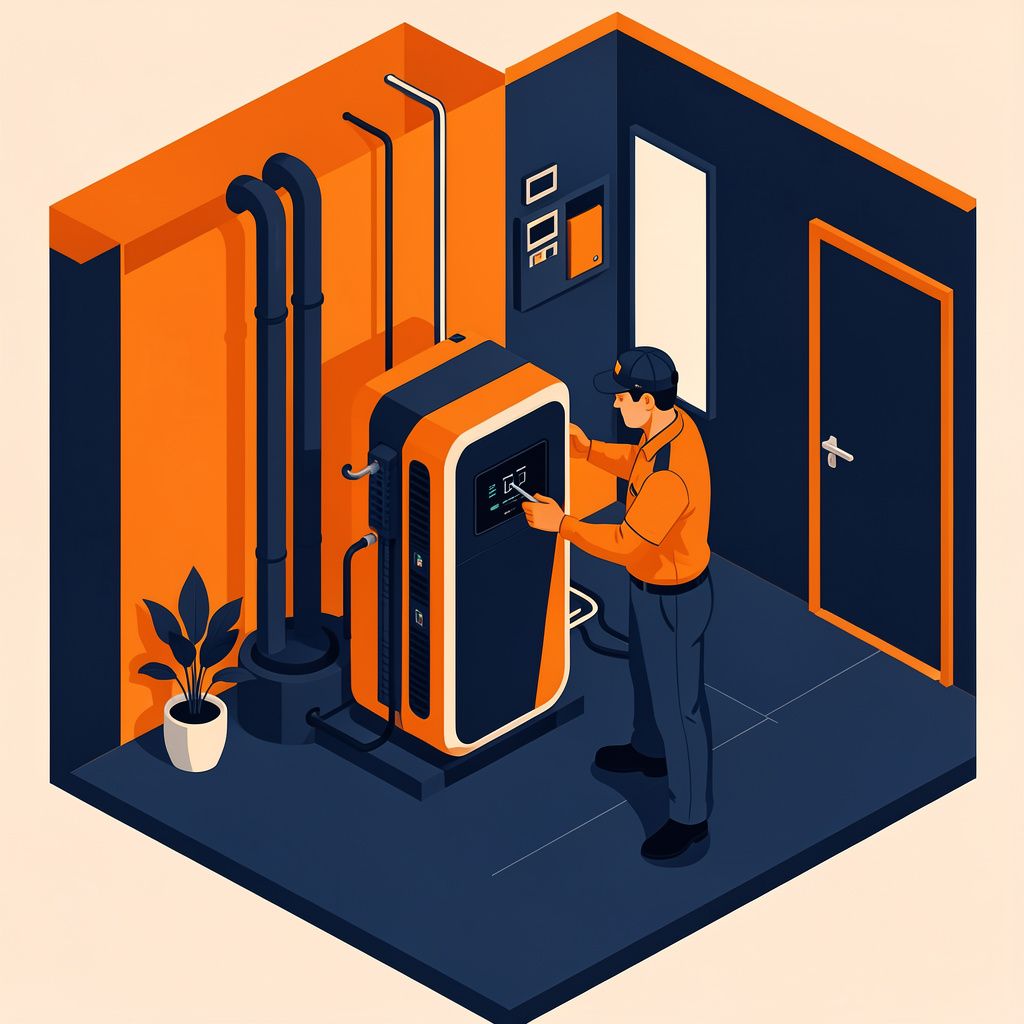
On Wednesday, 7 October 2026, the Dutch minority cabinet announced a major policy shift aimed at accelerating the domestic energy transition [1][3]. Minister Elanor Boekholt-O’Sullivan (Housing and Spatial Planning), alongside Minister Van Veldhoven-van der Meer (Climate and Green Growth), submitted a proposal to the House of Representatives to make smart hybrid heat pumps the mandatory standard starting in 2029 [1][2][4]. The regulation will target homeowners whose properties are not slated for connection to a district heating network, taking effect at the natural point of replacement for their existing central heating boilers [1][2]. By establishing this long-term regulatory mandate, the government aims to provide cleantech hardware manufacturers, smart grid innovators, and venture capital investors with the market clarity needed to scale up high-tech heating solutions [GPT].
Balancing Upfront Costs and Long-Term Efficiency
From a technical perspective, transitioning to hybrid systems—which combine electric heat pump technology with gas-fired backup for peak demand—is highly efficient [3]. A hybrid heat pump reduces household gas consumption for heating by an average of 65% and lowers residential carbon dioxide emissions by over 30% [1][2]. However, the financial barrier for homeowners remains steep [3]. A hybrid heat pump currently costs between €4,000 and €7,000, whereas a traditional gas boiler costs approximately €2,000 [4]. This represents an upfront capital expenditure premium of up to 5000 [4]. While the government notes that lower energy bills allow households to recoup this investment within ten years [4], the initial financial outlay has historically drawn political opposition [3].
Smart Hardware and Grid Integration
To prevent local power grids from overloading, the cabinet is mandating that all hybrid heat pumps installed from 2029 onwards must be ‘smart’ [1]. These high-tech systems are designed to communicate with the broader energy grid, allowing them to shift their electricity consumption to off-peak hours or periods when power prices are lowest [1][2][3]. The technical parameters governing these smart capabilities have been formalised in a newly published Dutch Technical Agreement (NTA) [1]. For cleantech and smart grid developers, this standardised framework offers a clear technical benchmark to develop next-generation energy transition hardware and automated demand-response robotics [GPT].
The Need for Policy Consistency in the Cleantech Sector
The Dutch installation and manufacturing sectors have strongly emphasised the necessity of policy stability [2]. In 2022, a similar mandate was proposed to take effect in 2026, prompting substantial private investment in workforce training and manufacturing capacity; however, the subsequent cancellation of the plan under the Schoof cabinet caused consumer demand to collapse [2][3]. Mark Harbers, chairman of the industry association Techniek Nederland, welcomed the return of the mandate but urged the government to maintain a consistent policy course [2]. Harbers stated that installers require the final regulations to be set at least one year before implementation to adapt business operations and train personnel [2]. Furthermore, he called on municipalities to clarify by 2028 which neighbourhoods will not receive district heating networks, ensuring consumers can make informed, long-term heating investments [2].
Exemptions and Funding Uncertainties
To ensure the policy remains practical, the cabinet has introduced exemptions for specific building categories [4]. Apartment buildings and historic monuments will be exempt from the 2029 mandate due to space limitations and structural constraints [3][4]. Additionally, functioning boilers do not need to be replaced prematurely [4]. While the government intends to support homeowners through existing instruments like the ISDE subsidy and interest-free loans from the National Warmtefonds [1][3], funding post-2030 remains unallocated [4]. The cabinet is scheduled to decide in the spring of 2027 whether additional climate finance will be mobilised to subsidise these high-tech hardware adoptions [4].