

TOPdesk Launches New AI Assistant to Support Overburdened IT Teams
Delft, Thursday 17 September 2026
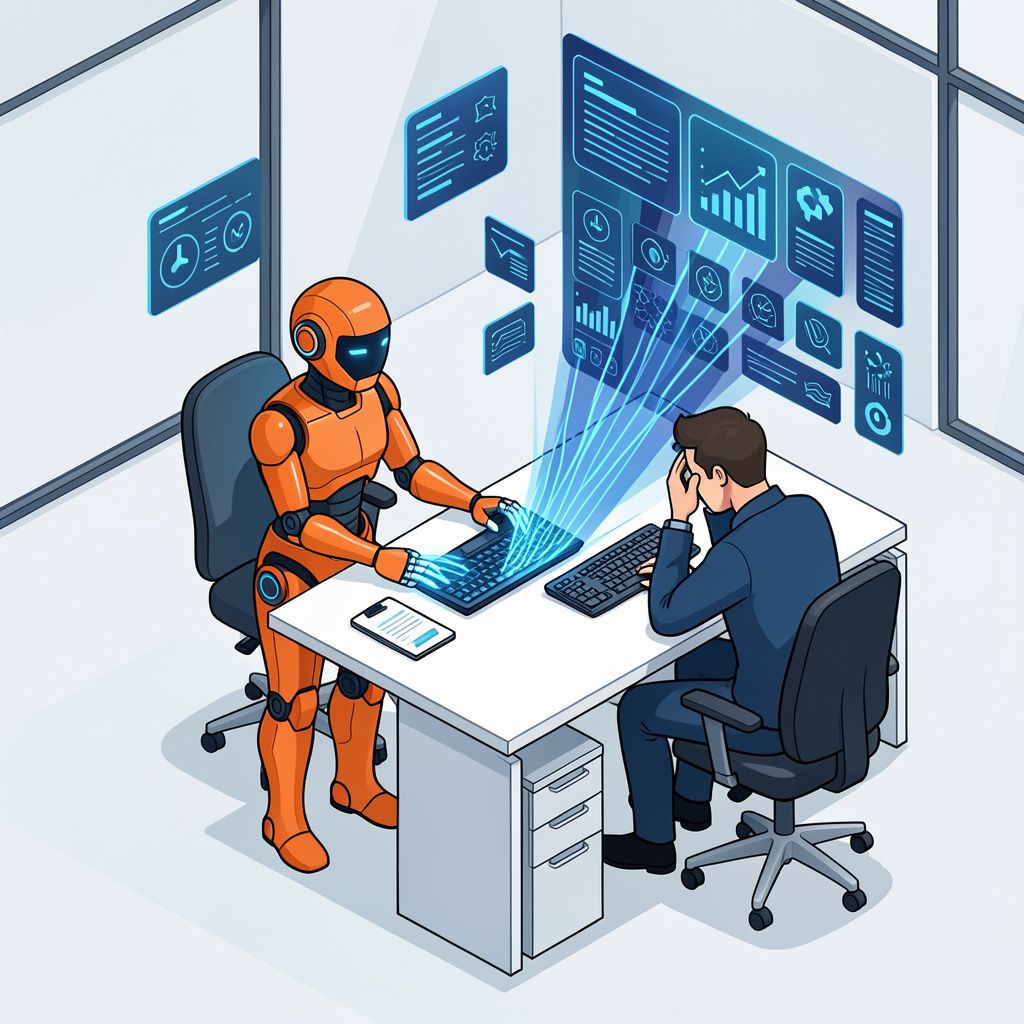
Launched on 16 September 2026, TOPdesk’s new AI assistant, Robin, aims to relieve the 40% of IT departments currently overwhelmed by daily operational firefighting.
Addressing the Operational Bottleneck
According to internal research conducted by TOPdesk, an estimated 40% of IT departments find themselves perpetually overwhelmed by routine operational tasks, often described as ‘putting out fires’ [1]. This operational strain severely limits their capacity to implement structural process improvements or prepare for technological transitions [1]. Launched on 16 September 2026, TOPdesk Robin is designed to alleviate these daily pressures by acting as an AI-powered teammate that assists service professionals and end-users with information retrieval, query resolution, and notification processing [1].
Unlocking Existing Service Knowledge
Wolter Smit, the Chief Executive Officer of TOPdesk, has emphasised that the organisations deriving the greatest value from artificial intelligence are not necessarily those that adopt it the fastest, but those that have established a solid operational foundation [1]. Service teams typically accumulate years of valuable experience and knowledge from past incidents, yet this information is rarely immediately accessible when a new ticket arises [1]. Robin seeks to bridge this gap by safely unlocking existing service knowledge and integrating it directly into the daily workflow, ensuring that technology supports human operators rather than complicating their routines [1].
Technical Integration and Smart Triage
To streamline the incoming flow of support tickets, TOPdesk has integrated a sophisticated ‘KI-Triage’ feature within its IT service management framework [2]. This capability automates the repetitive task of classifying incidents by generating real-time suggestions for categories, subcategories, priorities, and operator groups directly from the incident text [2]. Operating dynamically, the system updates its classification recommendations as the operator types, utilising the specific access permissions of the active user to maintain strict internal security boundaries [2].
Seamless Configuration and Workflow Control
The setup process is designed for immediate scalability, managed directly through the platform’s ‘Function Settings > AI Settings’ path, where users are prompted to review their internal AI policies before activation [2]. Upon activation, the regular incident categorisation protocol is automatically disabled to prevent system conflicts, allowing the AI-powered triage to function seamlessly [2]. To ensure a clean user interface, suggestions are presented via a banner that can be easily dismissed, and the AI halts further suggestion generation for a specific ticket once an operator either accepts or rejects the initial recommendations [2].
Data Security and Human Oversight
In an era of heightened digital vulnerability, data sovereignty remains a core pillar of TOPdesk’s deployment strategy. Client data is strictly retained within the customer’s specific geographic region and is completely excluded from training external AI models [1]. Furthermore, the KI-Triage system is engineered so that no sensitive usage data, such as generated suggestions, rejections, or completed values, is stored [2]. This ensures that organisations can scale their digital workflows without compromising compliance or exposing proprietary business intelligence [1][2].
Empowering the Modern Service Desk
Despite the efficiency gains, both TOPdesk’s leadership and technical documentation stress that technology must support, rather than replace, human judgment. All AI-generated suggestions require manual employee verification before any automated action is executed, mitigating the risk of AI errors or contextual misunderstandings [1][2]. To facilitate a broader digital ecosystem, TOPdesk’s broader AI strategy also includes an AI Readiness Dashboard to assess knowledge base suitability, a ‘Get Ready for AI’ workshop, and a Model Context Protocol (MCP) connection to allow seamless integration with external tools like Microsoft Copilot [1].